
The Hidden Role of RIP Settings in DTF Color Accuracy for U.S. Small Businesses

In DTF printing, color is not just about aesthetics. This is the client’s trust, reputation and money. One wrong shade, one profile shift, and the whole party goes into marriage. Accuracy does not appear here by chance. It is born out of consistency, attention, and an understanding of how each component works, from the ICC profile to the waveform.
Why Color Accuracy Decides Everything
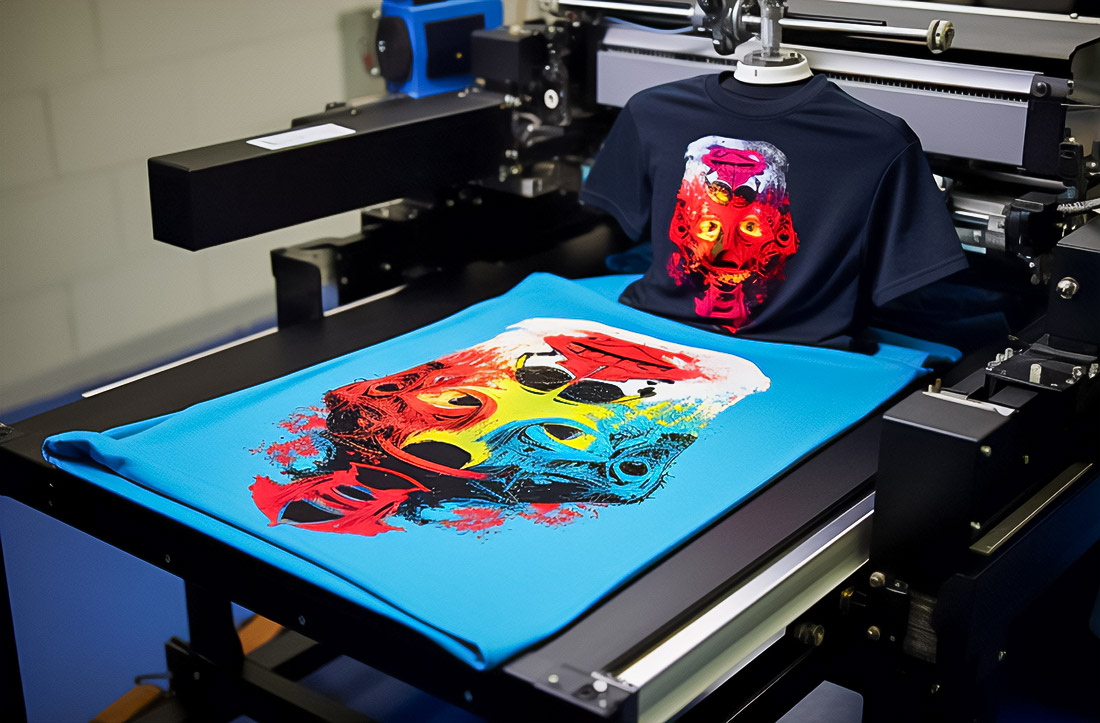
Color is a fragile element. It depends on many factors, from the room temperature to the condition of the printer nozzles. The RGB monitor is capable of showing almost a million more shades than the CMYK system, so we inevitably lose 15-20% saturation during conversion. The RIP program tries to save the situation by translating colors from the screen into the ink language, using the ICC profile as an accurate dictionary.
A well-calibrated profile can extend the printer’s color range by 30%. It’s not just a number, it’s the boundary between “almost right” and “spot on.” The slightest deviation and the trademark blue turns into a sea wave. The client will notice this.
RIP Print Conductor

RIP (Raster Image Processor) manages everything. It distributes colors, adjusts the white layer, monitors ink density, resolution, and printing speed. Without RIP, printing turns into chaos. This is where commands are formed: how the substrate will fit, how much ink will go in each pass, and what the dot structure will be.
600 DPI is the standard balance between speed and detail. 1200 DPI is already an accuracy for photo printing, where even shadows should be alive. One wrong parameter, and the lines will spread out, stripes will appear. And a properly configured RIP creates soft transitions, depth, and clean edges.
The White Layer Is An Invisible Base
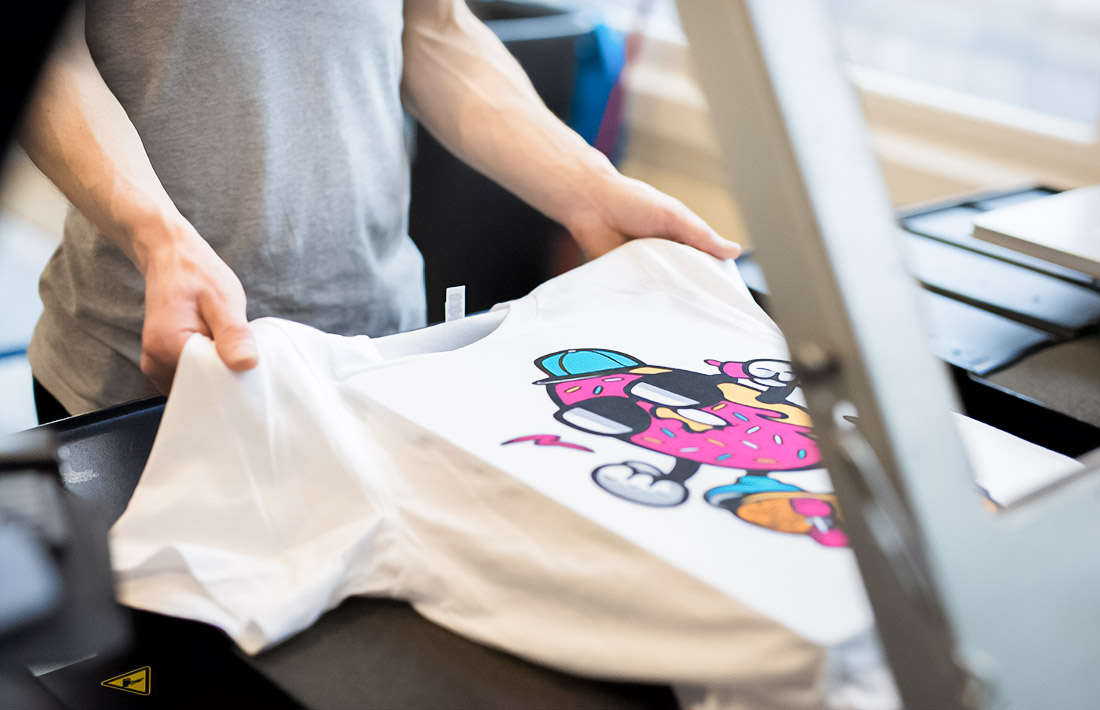
White ink is the foundation of DTF printing, holding the entire process together. But it is also the main source of overspending. Experienced operators know that reducing the opacity of white from 100% to 85% means saving up to 25% of ink per month. RIP allows you to control this precisely: set a “choke” of -0.2 mm so that the white does not peek out at the edges, or increase the density for dark fabrics. Every millimeter decides whether the image will be neat or sloppy.
Equipment And Color Physics
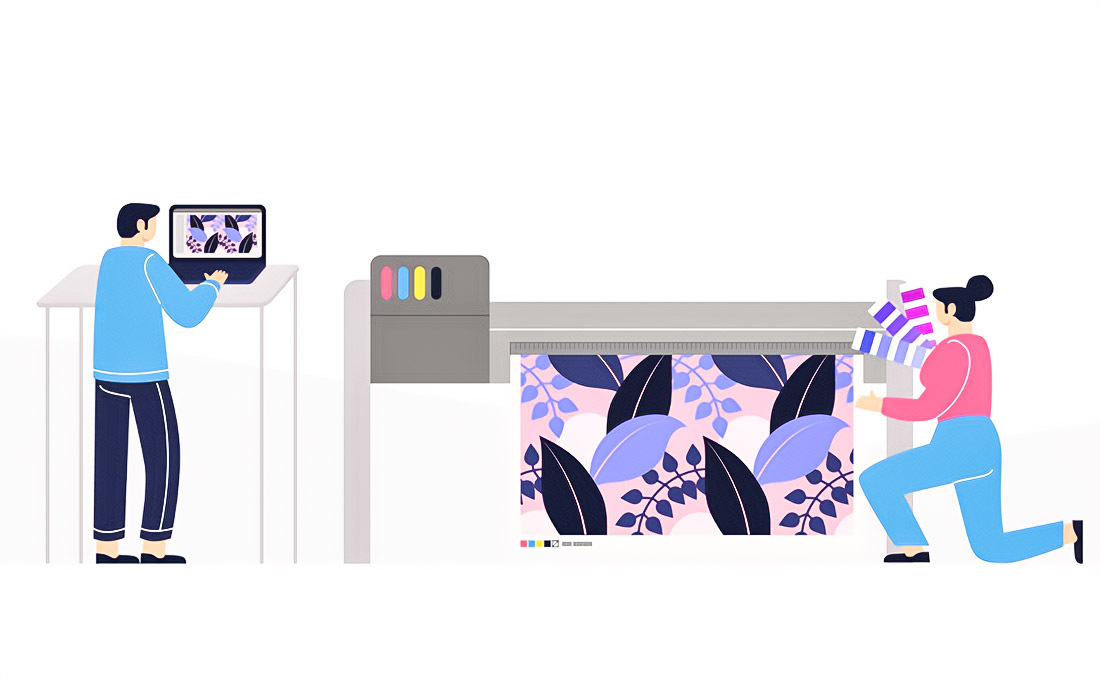
Any ICC profile is useless if the printer is clogged or the head is misaligned. Clogged magenta makes the green tones colder, and the color balance collapses. Therefore, a daily check of the nozzles is not a recommendation, but a law. The waveform regulates how a drop of ink shoots, how dense and precise it is. The correct shape means less grain, smooth transitions, and less wear on the head.
Technical calibration is like tuning a tool. Everything sounds fake without her.
Environmental Influence Is An Invisible Enemy
Even air can ruin an impression. At temperatures below 18°C, the ink thickens, layers and loses its saturation. At a humidity above 65%, the paint spreads, and below 35%, the nozzles dry out. The optimum is simple: 20-25°C and 40-60% RH.
And the light? He intervenes too. Standard lamps distort perception, so professionals use 5000K lighting with a CRI index of at least 90. Only in such conditions can you really understand whether the print matches the original.
Tests, Profiles And Materials
Any printer knows that a test print is cheaper than a damaged order. The spectrophotometer helps to create an accurate ICC profile for a specific combination of ink and film. Different materials behave differently. PET film reflects light differently than polyester or cotton. The RIP system saves settings for each type so as not to waste time guessing.
Cotton requires a slightly higher ink density. Polyester, on the contrary, is smaller, otherwise there will be oversaturation and streaks. These nuances transform ordinary printing into a craft where precision is achieved through discipline.
Saving Without Loss Of Quality
Well-built RIP settings are not just about quality, they are about profit. Less overspending of white ink, less rejection, fewer repeat orders. Each setting is an investment in stability.
Color accuracy in DTF printing is not magic, but an exact science. It’s a combination of numbers, temperature, drop frequency, and human attention. The print is not about “something like that”. It’s about the perfect match pixel to pixel, shade to shade. True mastery begins where guesswork ends and control begins.